
Back to Guide
Dehradun to Harsil Valley Distance and the Slow Road
HARSHIT JAISWALOctober 1, 2026 6 min read
Harsil is roughly 225 km from Dehradun via Mussoorie, Suwakholi and Uttarkashi, based on district route figures. This guide shows how to plan the drive and leave enough time to experience the valley.
Dehradun to Harsil Valley Distance and the Slow Road
Dehradun to Harsil Valley is roughly 225 km by the shorter road through Mussoorie, Suwakholi and Uttarkashi. That is a route-based estimate, not a fixed door-to-door reading: the Uttarkashi district administration lists about 150 km from Dehradun to Uttarkashi by this route and another 75 km from Uttarkashi to Harsil. A route through Rishikesh is substantially longer. Check the road and weather situation again before leaving, especially after rain or snow.
The number answers the search. It does not tell you how to make the trip feel like an escape. For that, keep the first day as a journey rather than trying to turn it into a checklist. Harsil sits along the Bhagirathi, where the mountains close around the valley and the pace of a city day starts to feel out of place. You do not have to manufacture a dramatic life change there. A morning with enough time to walk, look up and hear the river can be reason enough to go.
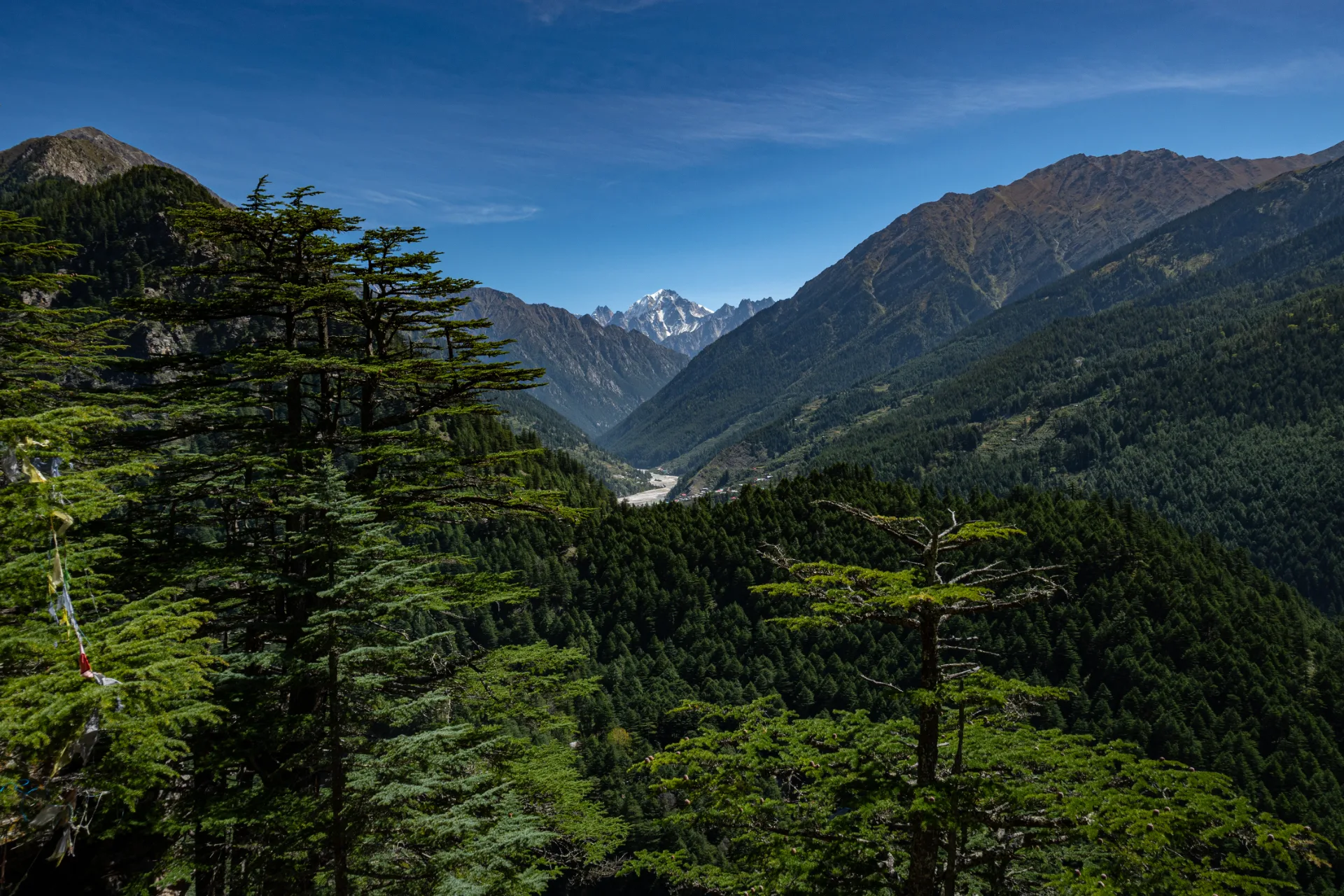
The route has three different moods
The opening stretch is about getting clear of Dehradun. On the shorter route, the road heads via Mussoorie and Suwakholi towards Uttarkashi. Uttarkashi is the useful hinge of the journey: a practical place to pause, eat, check conditions and decide whether to continue. The final 75 km towards Harsil should not be treated like a leftover city commute. Mountain roads, changing weather and stops make the clock less predictable than the kilometre count suggests.
If you search “Dehradun to Harsil distance” and see another figure, look at the route before deciding that one source is wrong. The district lists approximately 240 km from Dehradun to Uttarkashi via Rishikesh, compared with about 150 km via Suwakholi and Mussoorie. Add the district's 75 km Uttarkashi-Harsil figure and the difference becomes clear. Start point, road diversion and final stay location can change the total again. The safe planning answer is a route and an approximate distance, not a single magic number.
A simple way to read the drive is:
Dehradun → Mussoorie and Suwakholi → Uttarkashi → Harsil
That line is a planning sketch, not a live navigation instruction. Ask your driver or trip planner which road is actually usable for your dates. Give the journey daylight and room for breaks. If you arrive too late to enjoy the valley at all, an overnight pause at Uttarkashi may suit you better than a rushed finish.
The trip begins when you stop racing the last 75 km
Many people hear “Harsil” and think of a stop on the way to Gangotri. It can be that. It can also be the point of the trip. The state tourism board describes a valley of pine forest, apple orchards, mountain views and the Bhagirathi. Those details are easier to notice if you do not arrive with a schedule that assigns every half-hour a photograph.
Imagine the first evening kept deliberately small. Check in, have something warm, and take a short walk where local access allows. Look at the light on the slopes. Listen to the water without stepping onto an unsafe riverbank. Sleep. The following morning belongs to Harsil rather than to another stretch of road. This is an itinerary suggestion, not a claim that every stay or trail offers the same view.
For a young traveller exhausted by constant notifications, the value here is less about being “off grid” and more about having fewer decisions for a while. You can still take photos. You can still share them. But make space for the part no camera improves: walking slowly through a place that is home to other people, without turning their day into your content.
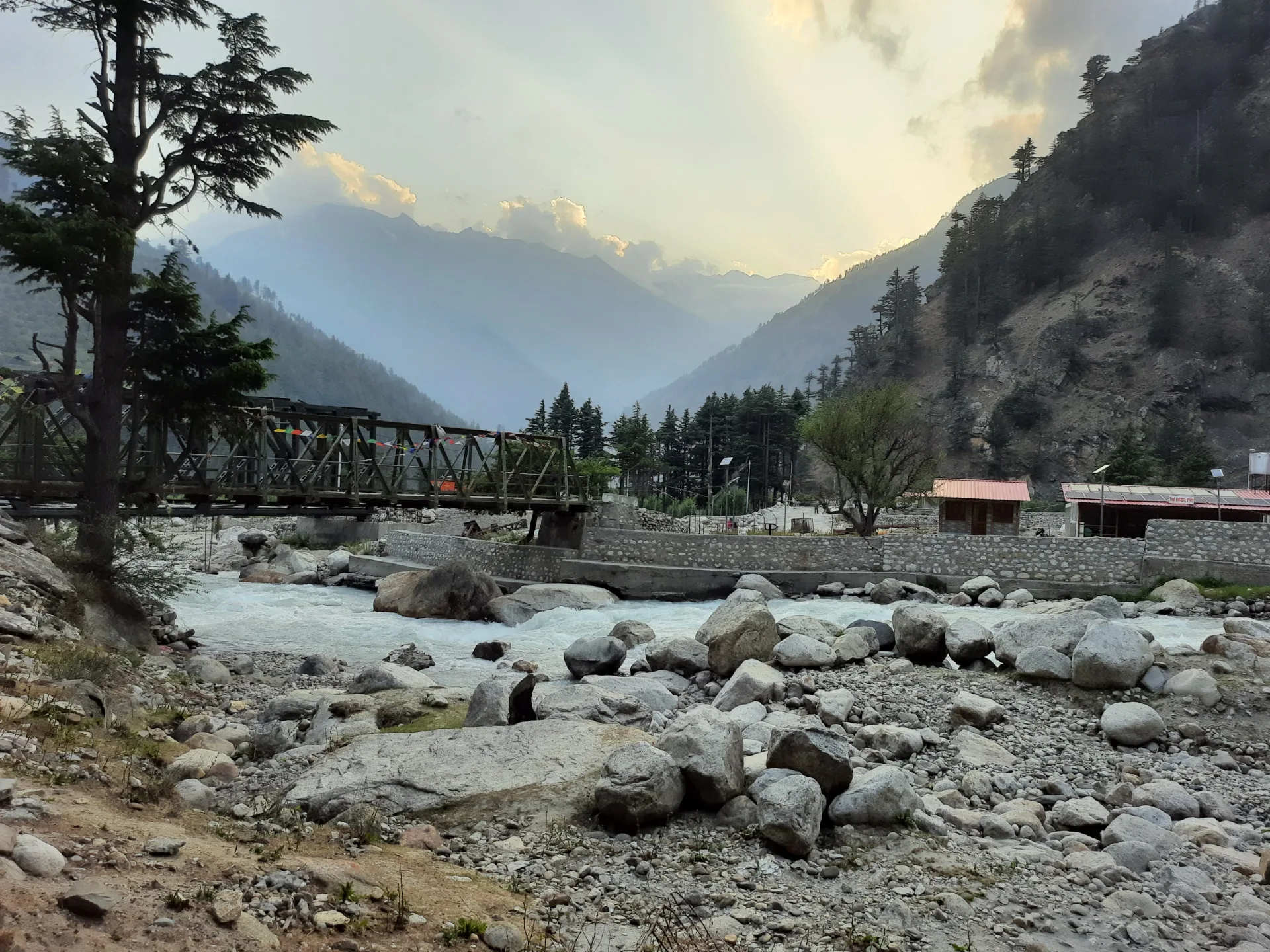
A Harsil day that does not try to do everything
The best version of this trip depends on what you are escaping. If the problem is a crowded calendar, copying that calendar into a mountain holiday will not help. Choose one anchor for the day. A gentle village walk, time near the forest edge on an accessible path, or a quiet meal with the valley in view is enough. Ask locally before entering orchards, crossing private land or using a trail whose condition you do not know.
Gangotri, Mukhwa and other nearby places may fit a longer trip, subject to seasonal access and your interests. They are options, not proof that a Harsil visit is incomplete without them. If pilgrimage is the purpose, plan around it openly. If rest is the purpose, protect the rest. The valley makes more sense when the itinerary has one clear intention.
The upper Bhagirathi area also deserves more care than a dreamy social caption can convey. Dharali, near Harsil, was affected by a severe disaster in August 2025. Respect local guidance and do not frame damaged or recovering communities as “hidden” sightseeing spots. Conditions and access can change. Verify the route, your stay and any side trip with current official advice and local hosts close to departure.
When the valley is most inviting
Uttarakhand Tourism identifies April to June and September to October as the usual visiting windows for Harsil. In spring and early summer, the trip works for people looking for a mountain break before the main monsoon period. September and October can bring a different feel after the rains, but September is not a promise of clear weather or clear roads. The dates are a starting point for planning, not a guarantee.
Winter is a separate kind of journey. The district administration notes heavy snow in the valley. Do not apply a summer drive plan to a winter visit. Snowfall, access, heating and the actual location of an open stay all need checking before anyone commits to the journey. If your goal is an easy first mountain escape, choose dates around conditions you can manage, not a photo you hope the weather will recreate.
Whatever the season, carry warm layers for the altitude, water, your regular medicines and a power bank. Harsil is around 2,660 metres according to the district's destination page. Give yourself permission to move more slowly than you would in Dehradun. If you have health concerns about altitude or travel, get personal medical advice before the trip; a blog cannot assess your situation.
Plan the return before you fall for the place
A two-day sprint from Dehradun may put most of your available time on the road. A more satisfying escape usually leaves an unhurried block in Harsil and a sensible return day. That might mean two nights in or near the valley, or a stop at Uttarkashi in one direction. There is no universal number of nights: the decision depends on the travellers, road conditions, budget and whether Gangotri is part of the plan.
Before paying for any trip, confirm the pick-up point, road route, exact stay location, number of nights, whether local transfers are included and what happens if weather or a road restriction changes the plan.
Ask what is included rather than assuming that “Harsil package” means the same thing everywhere.
The useful question is not only “How far is Dehradun to Harsil Valley?”
It is “How much of this trip will I actually spend in the valley?”


