
Back to Guide
Kainchi Dham - Plan the Visit Not Just the Drive
HARSHIT JAISWALSeptember 26, 2026 8 min read
Kainchi Dham Mandir is a temple complex associated with Neem Karoli Baba in Uttarakhand’s Nainital district. The Trust lists Kathgodam railway station at 37 km. Plan around seasonal darshan hours, temple rules and a flexible return journey.
Kainchi Dham Mandir Plan the Visit Not Just the Drive
Some trips begin with a booked ticket. This one often begins with a name you keep hearing: Kainchi Dham. A family member wants to visit, a photograph stays in your saved folder, and suddenly the question changes from “Where is it?” to “How do we make this visit work?”
Kainchi Dham Mandir is a temple complex associated with Neem Karoli Baba in Uttarakhand’s Nainital district. The temple Trust lists Kathgodam railway station at 37 km from the mandir. That is a useful starting point, but a meaningful visit needs more than a distance: seasonal timings, respectful conduct and a return plan that leaves room for the unexpected. Trust visitor information.
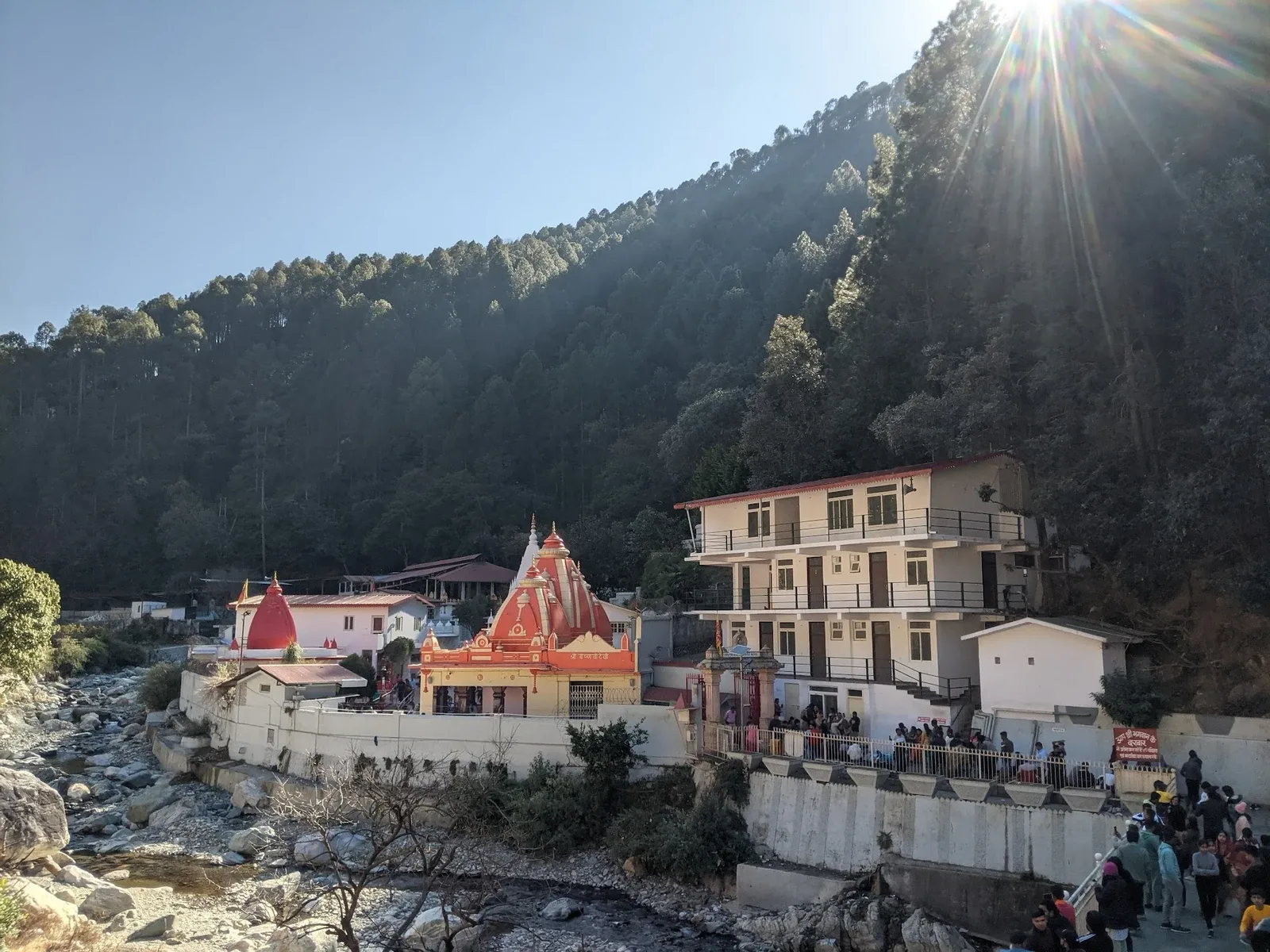
Kainchi Dham temple exterior, photographed on 12 January 2023. Photo by 25 Cents FC, via Wikimedia Commons, CC BY-SA 3.0. Resized and converted to WebP; no scene alteration. Photo source. Licence.
First Understand the Place You Are Visiting
Kainchi Dham is not a viewpoint with a temple attached. It is a place of worship. That distinction changes how you prepare: the photograph can wait, the phone stays away inside, and the visit should not be reduced to a rushed stop between sightseeing pins.
The Trust identifies the site as Shree Kainchi Hanuman Mandir, beside the Kshipra river in the Bhowali Range. Its historical account describes Maharaj Ji and Shree Siddhi Maa’s association with the site and the development of its shrines. Uttarakhand Tourism connects the name “Kainchi” with the crossing hills that resemble scissors. These details give the landscape context without turning devotion into a promise of miracles or personal success. Trust history. Uttarakhand Tourism’s Bhowali guide.
You do not need a dramatic reason to come. You do need to respect why other people are there.
Kathgodam to Kainchi Dham Distance What the 37 km Means
If you are searching for “kathgodam to kainchi dham distance” before booking your train, use the Trust’s 37 km reference. Treat it as a route-planning figure, not an exact odometer reading from every pickup point. Your station exit, destination drop-off and chosen approach can change the final mileage. Trust travel directions.
More importantly, kilometres do not tell you how much of the day to reserve. The trip includes getting out of the station, finding the pickup, road travel, arrival arrangements, darshan and the return. A short-looking distance on a screen can still require a generous window when traffic or queues build.
Before confirming transport, share your train arrival, return departure, group size and any mobility needs. Ask for a date-specific road-time estimate and a clear pickup meeting point. Confirm the permitted drop-off arrangement rather than assuming the vehicle can stop beside the entrance. Keep your onward connection separate from an optimistic “we should be back by then.”
For a family travelling together, the useful question is whether everyone can manage the arrival, walking and waiting comfortably. Tell the person arranging your transport about luggage and assistance needs in advance. If someone needs a gentler pace, an overnight stay may be more practical than fitting darshan between two tight train connections. Confirm those arrangements before making non-refundable bookings.
Check Darshan Timings Before Building the Day
The Trust publishes seasonal darshan hours: April to October, 6:30 am to 7:00 pm; November to March, 7:00 am to 6:00 pm. These are local Indian Standard Time. Its guidance describes year-round darshan, subject to announced restrictions. Published timings.
Aarti is a separate schedule. Morning aarti is listed at 7:15 am. Evening aarti is listed at 6:15 pm from April to October, 5:30 pm from November to January, and 5:45 pm in February and March. Do not confuse an aarti time with the entire public visiting window.
Check the Trust’s latest notices before departure, especially around special dates. Published hours are not a guarantee that your train, road transfer and entry will align perfectly. If attending aarti matters to you, build the journey around that intention rather than trying to squeeze it into whatever time remains.
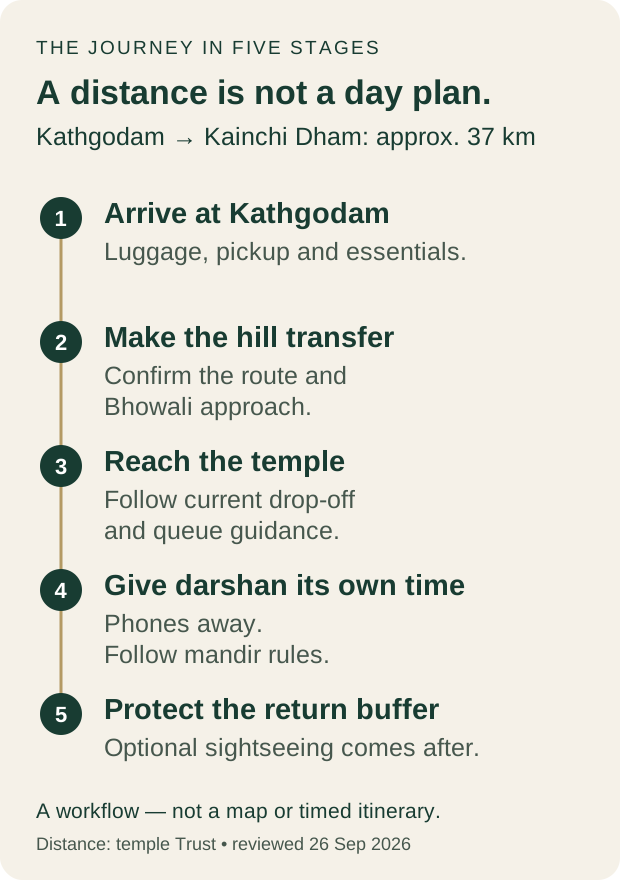
Give the Day Five Clear Chapters
Arrive With the Basics Already Settled
Keep the pickup details accessible before leaving the station. Check your return ticket, carry the essentials, and agree on a meeting point if the group separates. These small decisions save everyone from making rushed choices later.
Let the Transfer Be a Transfer
It is tempting to add every café or photo stop someone suggests. Decide which breaks are genuinely needed and which can wait. On a day with a fixed return train, extra stops should be optional, not the centre of the plan.
Pause Before Entering
Once you arrive, check the current entry instructions and prepare to put your phone away. Families should agree where to regroup after darshan. Do not assume storage facilities, wheelchair access or assistance are available without checking the actual arrangements.
Make Space for Darshan
There is no dependable queue-time promise in this guide. Follow the staff’s directions, avoid pushing your group toward an imagined deadline, and keep the focus on the visit itself. For older relatives or children, discuss a comfortable pace before travel rather than discovering conflicting expectations at the gate.
Protect the Return
Arrange where and how you will meet your driver afterwards. Leave time for food, a brief rest and the journey back. If the day runs late, drop optional sightseeing first. A return buffer is not wasted holiday time; it is what keeps the final part of the day manageable.
The Temple Rules That Matter More Than Your Camera
The administration’s notice prohibits mobile-phone use, photography and videography inside the mandir premises. Wear respectful attire, maintain decorum and follow staff instructions. Do not feed monkeys or bring pets. The residential ashram area is restricted to residents and sevaks; visitor entry to the temple does not grant access to those spaces. Administration’s rules notice.
The notice also prohibits littering, bathing in the Kshipra river or polluting it. It sets entry restrictions involving consumption of non-vegetarian food, alcohol, narcotics, paan and tobacco, and prohibits weapons. Read the complete notice before visiting rather than relying on a social-media summary.
Respect is practical here. It means leaving the river clean, not treating residential areas as attractions, and accepting that some moments are not yours to record.
An Overnight Plan Is Not an Ashram Booking
If your train timings make a same-day return feel rushed, consider an overnight plan. But separate private lodging from temple accommodation. The Trust says its limited rooms primarily serve priests, workers and staff, and warns that no authorised agent issues ashram accommodation permits or letters. Its notices reject online and offline room-booking claims. Trust accommodation guidance. Trust updates.
The Trust also states that yoga, meditation, Ayurvedic and healing programmes are not permitted within the temple and ashram premises. Do not mistake Kainchi Dham for a commercially bookable retreat. For a hotel outside the premises, confirm the actual address, cancellation terms and transfer arrangements separately.
Planning for June 15 Needs a Different Approach
June 15 is Sthapna Diwas, the temple’s consecration observance, associated with bhandara. It is not Neem Karoli Baba’s birthday. The Trust describes substantial attendance and special arrangements around the occasion. Festival information.
For this date, ordinary-day assumptions are not enough. Check the relevant year’s traffic, entry and transport announcements. Previous shuttle services or extended hours do not guarantee the same arrangements next time. If you have a fixed onward connection, be especially cautious about how many commitments you place around the visit.
Three Questions Worth Answering Before You Leave
Do I Have to Bring a Blanket or a Particular Offering?
No. The Trust says a blanket or specific offering is not compulsory. Choose respectfully, but do not let a viral checklist turn a personal visit into an unnecessary shopping obligation. Trust FAQs.
Should I Pay Someone Promising Special Temple Arrangements?
Verify any claim directly with the temple office before paying. The Trust warns against unauthorised donations, accommodation claims and paid rituals. Its 21 May 2026 notice specifically addresses a false bhandara appeal. A familiar name or persuasive message does not establish authorisation. Official warnings.
What Should Go in My Day Bag?
Keep it light: travel ID, return-ticket details, water for the journey, personal essentials and a suitable layer for the conditions. Plan any food or rest stops with your group. Check the forecast and road information close to departure; neither a historic photograph nor this guide describes today’s weather.
Leave With More Than a Completed Pin
A thoughtful Kainchi Dham Mandir visit does not need an overloaded itinerary. It needs clear travel arrangements, space for darshan and enough flexibility to return without rushing. Let the practical planning do its job so that, once you are there, it stops demanding your attention.
If you would like help exploring a travel plan, share your dates, starting point and group size with LN Tourism on WhatsApp or call +91 88588-73018. Temple entry and ashram arrangements remain subject to the Trust’s rules.
Visitor information checked on 27 September 2026. Recheck official notices before travel; this is not a live road, crowd or availability report.


